Field Tests
Audience: Teachers
The projects below were conducted by organizations that participated in a Community of Practice to field test the messaging recommendations of the Math Narrative Project. Between April 2025 and January 2026, organizations directly engaged 6th-10th grade public school math teachers. Check out the messaging each organization developed, how they tested it, and what they learned about helping teachers better support their students’ math learning.


Bank Street
Bank Street embedded student video messages affirming the value of mistakes, reframing capability and struggle, and reassessing assumptions for 49 New York teachers participating in a professional learning session in November.

Student Narratives Transform Teacher Buy-In
Teachers listened to student video messages describing how what teachers do and do not do in the classroom shapes their experience of learning math. Hearing student voices helped bring the recommendations to life and supported teachers in engaging more deeply with them and considering changes in practice.
Teacher Mindset v. Practice
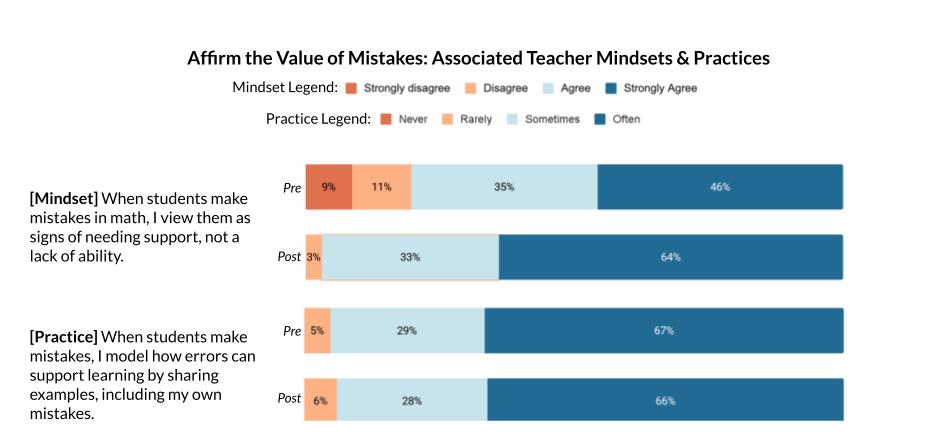
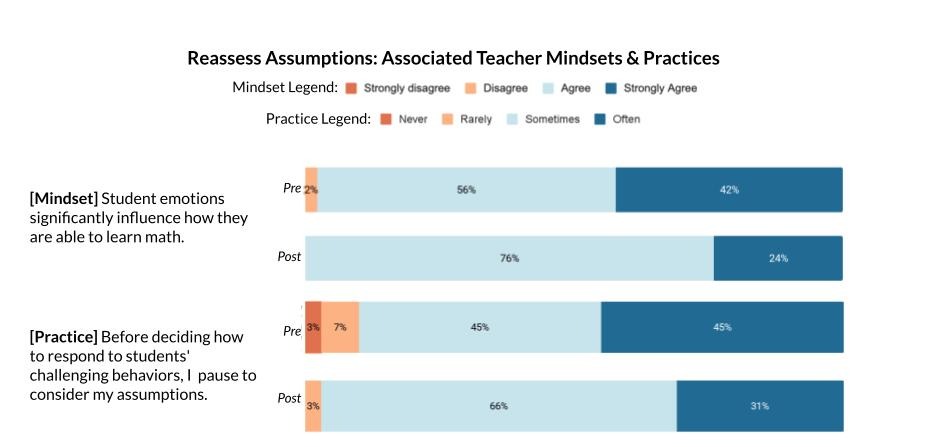
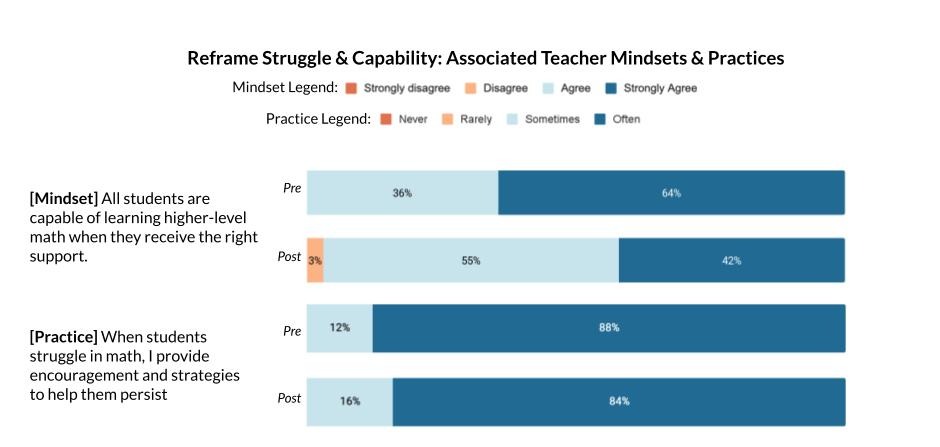
There were high-rates of teacher mindset-related agreement to the three recommendations but that did not automatically translate to practice change. We found the clearest movement in teachers’ reported positive practices related to affirm the value of mistakes. We found small declines in teachers’ positive practices associated with reframe struggle and capability. Teacher self-reported practices related to reassessing assumptions showed limited change.
Clarity Drives Action
Teachers may need additional support making connections from recommendations to classroom practice. Unlike the other recommendations, reassessing assumptions likely requires rapid, in the moment self-correction of teachers’ internal thought processes. Teachers may therefore need concrete examples of strategies on how to do this.
Incorporate multiple measurement points and longer observation windows to better capture change over time.
Enhance data with classroom observations and teacher reflection surveys. Adding qualitative data may provide deeper insight to how teachers interpret the messages.
Differentiate between mindset shifts and observable classroom practices, especially for constructs not readily visible in instruction.
BranchED
BranchED led professional development among 30 educators on math relevance, the value of mistakes, and help-seeking; and provided implementation opportunities through mixed reality simulation. Impact was assessed through pre- and post-surveys and a focus group.
The BranchED field test examined how narrative-based framing influences educators’ confidence, beliefs, and instructional practice, hypothesizing that reinforcing these narratives, in a systematic manner (self-assessment, reflection, application and observation) will increase educator self-efficacy and promote the use of the math narratives.
A professional development survey provided a baseline. Participants reported strong agreement that the narratives were relevant to their roles. They also affirmed the role of math narratives in supporting student engagement and success in the math classroom (pre 2.0; post 3.2 – 4 point scale). They also identified strategies they plan to apply, indicating early shifts in confidence and readiness to change practice.
Six educators then field tested the full toolkit. The self-efficacy tool and reflection template measure changes in educators’ beliefs and perceived readiness to implement narrative-aligned practices. The POP Cycle observation tool includes concrete, observable “look-fors” in teacher actions and student behaviors.
Together, the findings measure changes in emotions, beliefs, instructional behaviors, and narrative uptake in classroom settings.
Co-designing with practicing teachers strengthened the clarity and credibility of the observation tool. Structured reflection cycles, self-efficacy, reflection, observation, and dialogue are essential for helping educators surface their beliefs and connect them to instructional practice. A challenge: Supporting educators from valuing math narratives conceptually to implementing them intentionally in their classrooms.
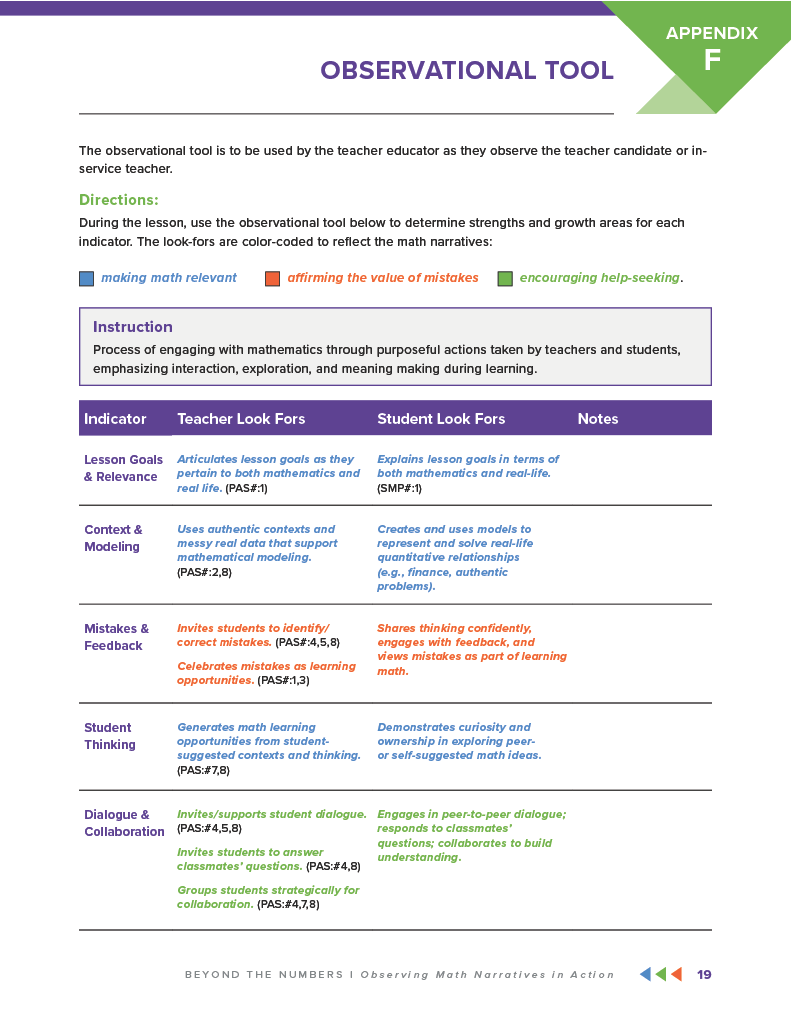
Beyond the Numbers: Shaping Student Success through Math Narratives in Action Toolkit: You are invited you to complete the linked form to be notified when the final toolkit is released.
ConnectED
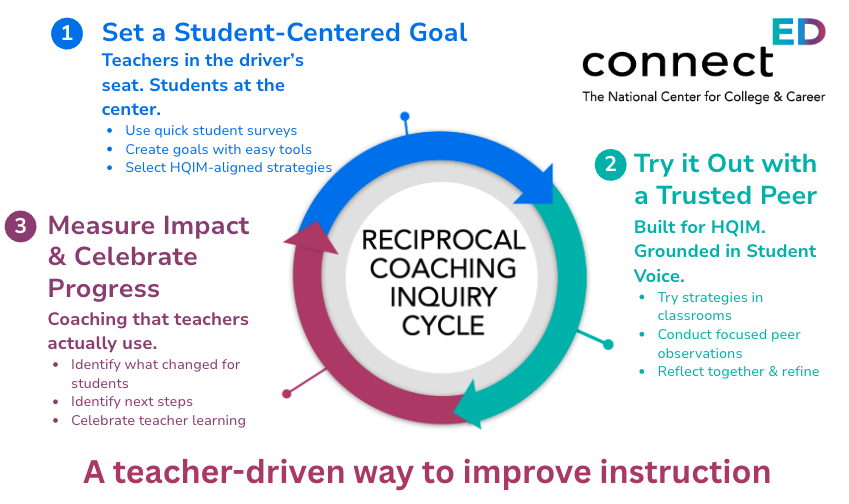
ConnectED integrated math narrative messages (student agency, emotions, reassessing assumptions, and relevance) into the Reciprocal Coaching program, a peer-to-peer structure for teachers to reflect on their practice together. ConnectED worked with 8 teacher pairs in 2 districts and measured impact with surveys, reflective prompts, and focus groups.
1. The messages helped take on a key challenge in Professional Development and coaching: teachers’ defensiveness when asked to reflect on how their own assumptions and practices negatively impact students. Teachers were far more open to self-reflection when (1) informed by video-based teacher and student voices, and (2) processing these messages with a trusted colleague.
2. Teachers shifted their interpretation of student “disengagement” as a lack of interest to a sign of frustration, feeling like they are the only one confused, a desire to share a different approach to a problem, and systemic failures including a lack of permanent math teachers. Elementary teachers shared that some “behavioral challenges” were resolved when students were invited to share their unique approach to a problem; High School teachers decided to remind students their math score is a reflection of what they know now, “not who they are.”
3. The Reciprocal Coaching program facilitated significant shifts in approaches to building relationships. During the program, teachers realized that building connections with some students requires time outside of instruction, and brainstormed ways of breaking through students’ “protective shells” and ways to encourage students to ask more questions.
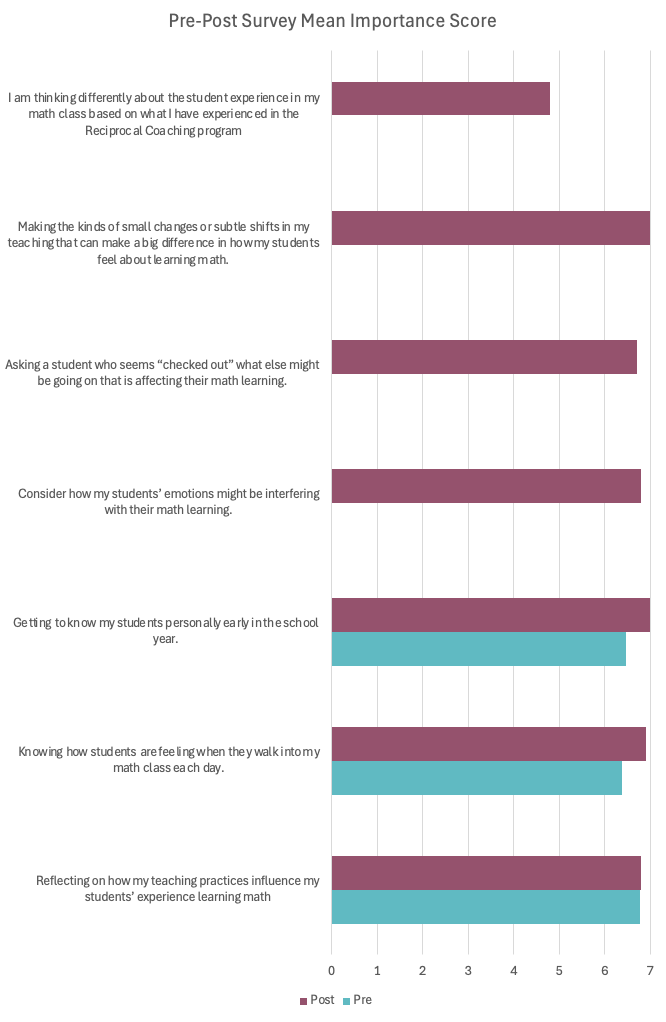
Working closely with a trusted colleague who is also trying out new instructional approaches helps teachers acknowledge internalized assumptions and “categorizations” of students.
Strongest messages occur early and overlap with later messages, creating repetition.
It is powerful when participants reflect and respond to each others’ ideas in writing, giving participants an opportunity to contribute and build on others’ ideas.
Impact Florida
Impact Florida produced a podcast focused on “Prioritizing Building Relationships.” The series centered teacher and student voice and was paired with facilitated reflection with 105 math teachers. Impact was assessed through focus groups, podcast analytics, and PERTS Elevate surveys.

The most effective messages were those that treated relationship-building as foundational to mathematics learning and delivered that message through authentic teacher and student voices and stories. Teachers resonated with the idea that math is deeply emotional and identity-shaping, and that trust and teacher language shape whether students engage and persist. In focus groups, teachers described increased empathy for students’ lived experiences and greater awareness that intent and impact are not always aligned in teacher communication.
Teachers also identified specific practices they intended to implement, including more intentional relationship-building throughout the year, more inclusive and affirming language, increased listening and student voice routines, and shifts from control and compliance toward connection and care.
In addition to qualitative evidence, student perception data from PERTS Elevate showed modest positive shifts across nearly 10,000 students, including gains in comfort sharing ideas (+2) and teacher responsiveness to student suggestions (+3), suggesting incremental improvements in classroom community and student voice aligned with relationship-building goals similarities in their lived experiences and context.
Messaging was most effective when it was embedded in professional learning that included discussion and collective problem solving. Teacher and student voice increased credibility. Investing in message development and partnering with measurement experts strengthened analysis. The biggest challenge was measuring belief and behavior change, given social desirability and the time need for instructional shifts.
Listen to What Counts?
MathTrust
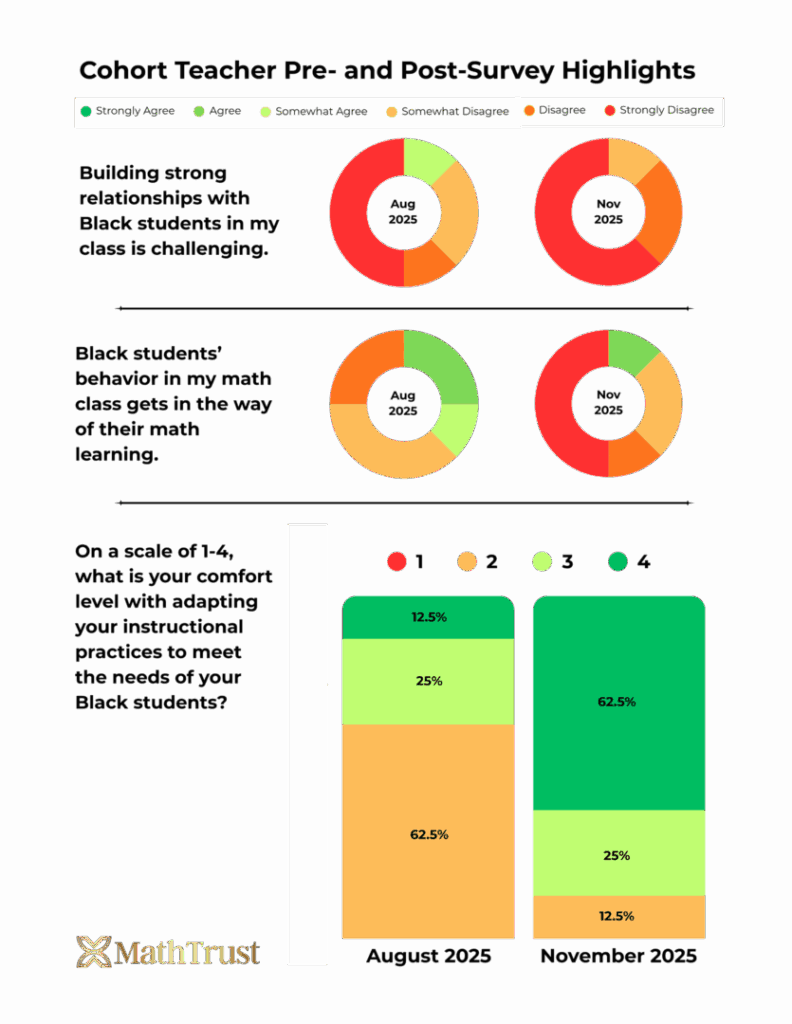
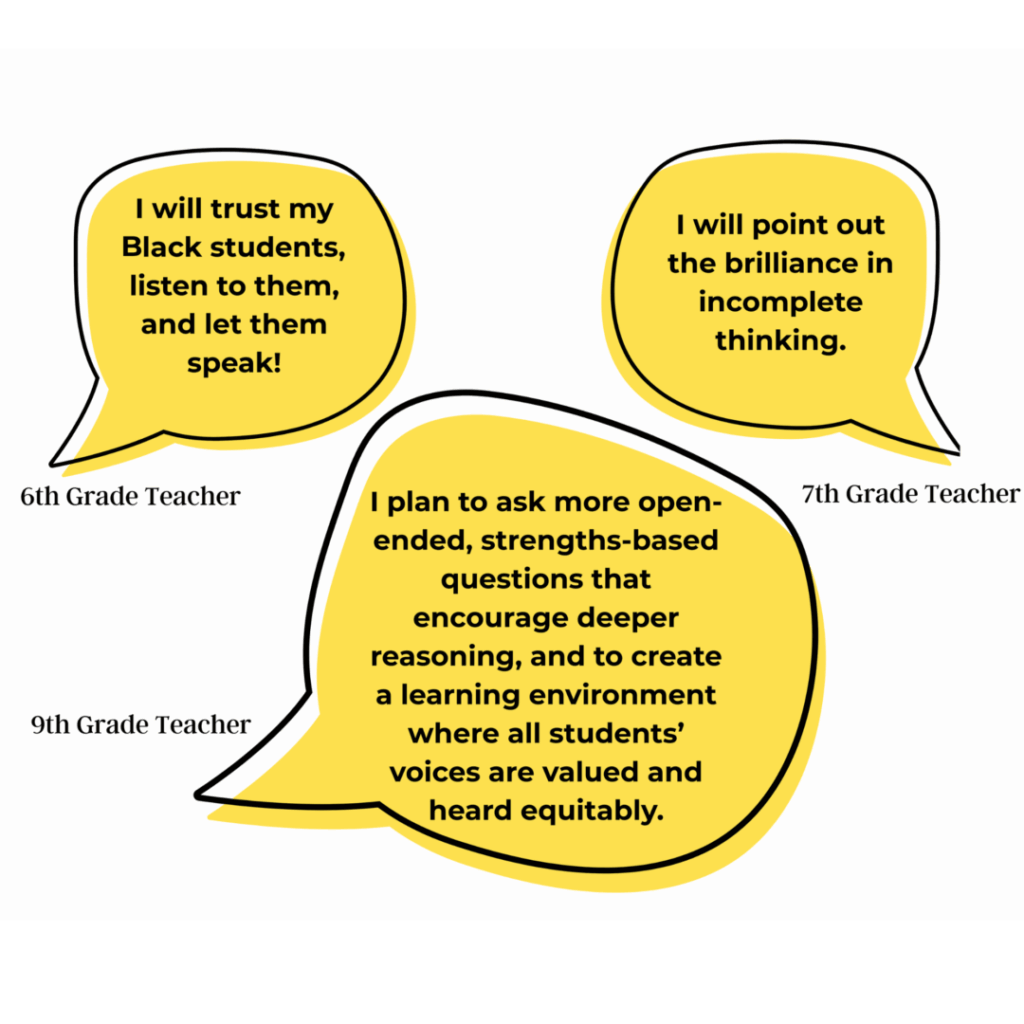
Using videos featuring Black students, MathTrust led a 4-month professional learning series with 8 middle school teachers focused on reassessing assumptions and prioritizing relationship building. Shifts in teachers’ beliefs about Black students was measured using surveys, reflections, and classroom observations.

Positioning Black students as primary messengers was the most effective aspect of the intervention. Teachers got the opportunity to see students as their full selves: their emotions, lived experiences, and perspectives on learning math. The authentic videos disrupted deficit-based assumptions and invited teachers into reflection rather than defensiveness.
Repeated use of the same student stories over the 4-month series deepened impact and supported shifts in teachers’ beliefs and emotional responses. Teachers reported greater empathy, increased awareness of how their interpretations of behavior affected students, and a stronger belief in the importance of nurturing relationships.
Evidence of impact: Teachers demonstrated increased intentionality in inviting Black students to speak and lead, greater use of discourse strategies, and changes in how they responded to behaviors previously viewed as barriers to learning. Together, these findings suggest that centering student voice through narrative-based messaging can meaningfully influence teacher beliefs, emotions, and instructional behaviors.
Messaging must be emotionally compelling and repeated over time to shift beliefs and behaviors. Centering Black students as messengers elevated their agency and created powerful entry points for reflection and change. Moving forward, MathTrust will foreground student voices with structured reflection. Biggest challenge: measuring how belief shifts translated into instructional change within a limited timeframe.

OpenStax
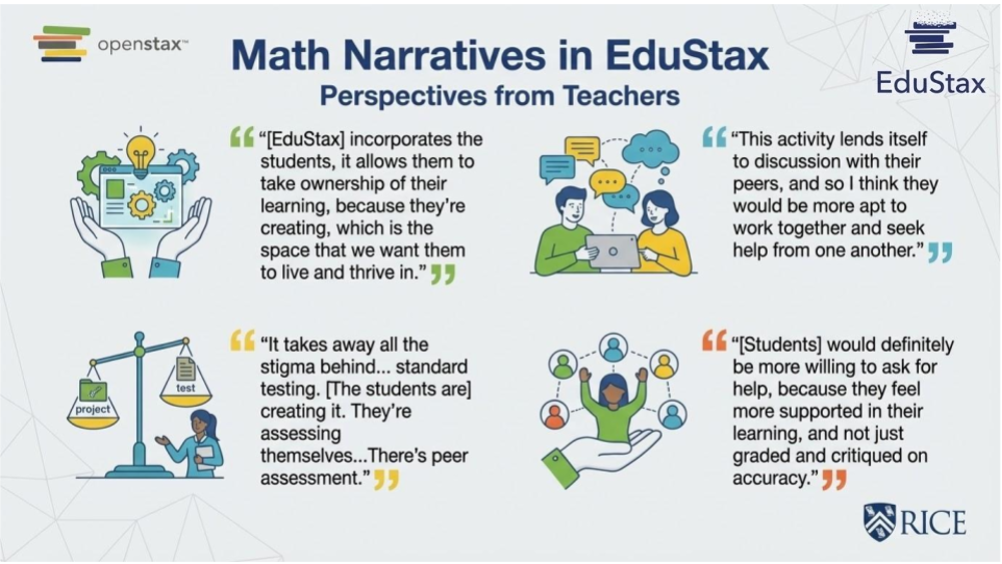
OpenStax embedded math narratives into an AI lesson planning tool to impact teacher and student attitudes on struggle and mistakes. Impact was measured through qualitative and quantitative research with 37 teachers in Texas using pre- and post-surveys and classroom records of teacher behavior.

In qualitative interviews, teachers indicated that they already had positive attitudes towards mistakes and struggle, seeing both as opportunities for deep learning. However, this may be due to demand characteristics; they did indicate that their patience for mistakes did have a limit as the year went on, and did express some discomfort with their students’ strong negative emotions around failure. The interviews indicated that they anticipated the tool having a stronger impact on their students’ emotions rather than their own.
Teachers indicated that the tool would support and enhance their efforts to communicate the value of mistakes and struggle to their students.
Although the scope was narrowed to focus on mistakes and struggle, the teachers spontaneously mentioned other aspects of the math narrative project, including elevating student agency, building relationships, alleviating negative affective responses in math, and rethinking their own capability.
Teachers predicted the EduStax activities would promote creative agency, reduce test anxiety, and reduce students’ negative affective responses to being wrong.
Interviews suggested a ceiling effect for teacher attitudes; even if they are impacted positively, the positive skew for these beliefs will make it hard for existing measurement tools to document the change.
The results suggested it may be more likely to observe a measurable change in students’ attitudes than in teachers’, even though the tool is teacher-facing.
Partnership for Los Angeles Schools
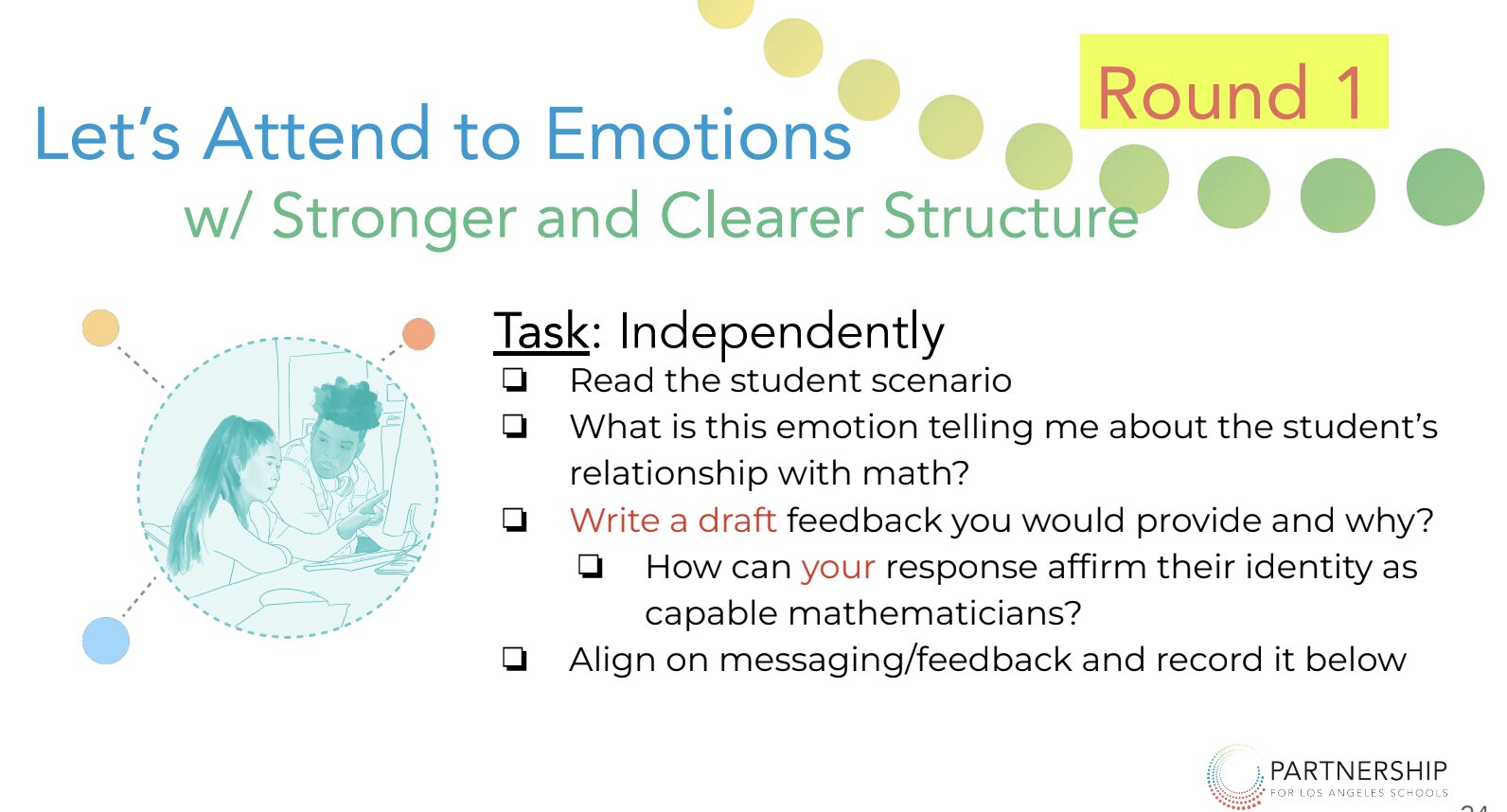
Partnership for Los Angeles Schools embedded student video interview content into a series of professional learning sessions with mathematics educators. The project focused on Emotions in Math Learning (Recommendation) and the Role of Emotions (Belief Pathway) and explored valuing student thinking and maintaining cognitive demand.

- Student interview videos were the most effective messaging strategy. By sharing their emotional experiences and whether their thinking was valued, student messages prompted deeper teacher empathy and reflection than adult-to-adult messaging alone.
- Explicitly acknowledging students’ negative or mixed emotions helped teachers recognize how emotions influence engagement, persistence, and performance, leading to plans for regular check-ins and more responsive instruction.
- Providing teachers with concrete examples, such as vignettes, sample language, and rehearsal opportunities enabled teachers to move from empathy to action and respond to student emotions in real time.
- Narratives reinforced and deepened beliefs about emotions in learning. Hearing students articulate these connections strengthened teachers’ responsibility for creating emotionally safe math environments.
- Quantitative data (pre/post surveys) showed increased agreement that emotions matter in math learning and should be considered when students enter class, reinforcing qualitative findings.
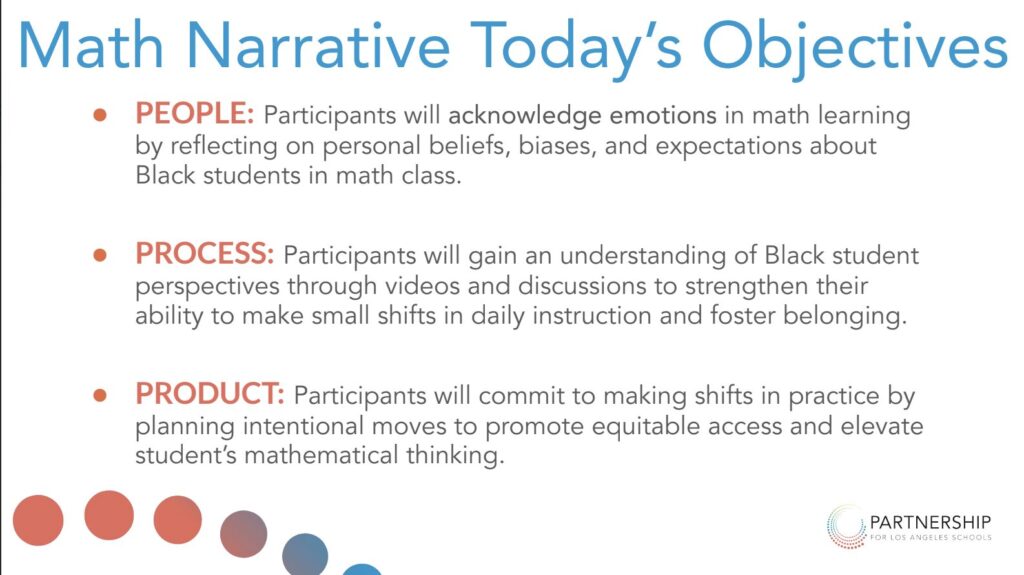
Centering student voice required planning, skilled facilitation, and time to build trust and elicit authentic narratives. Equipping educators with concrete tools and rehearsal opportunities strengthened uptake. Measuring impact was most effective when combining qualitative reflection with pre/post surveys. The biggest challenge was balancing authentic storytelling with a compressed timeline.
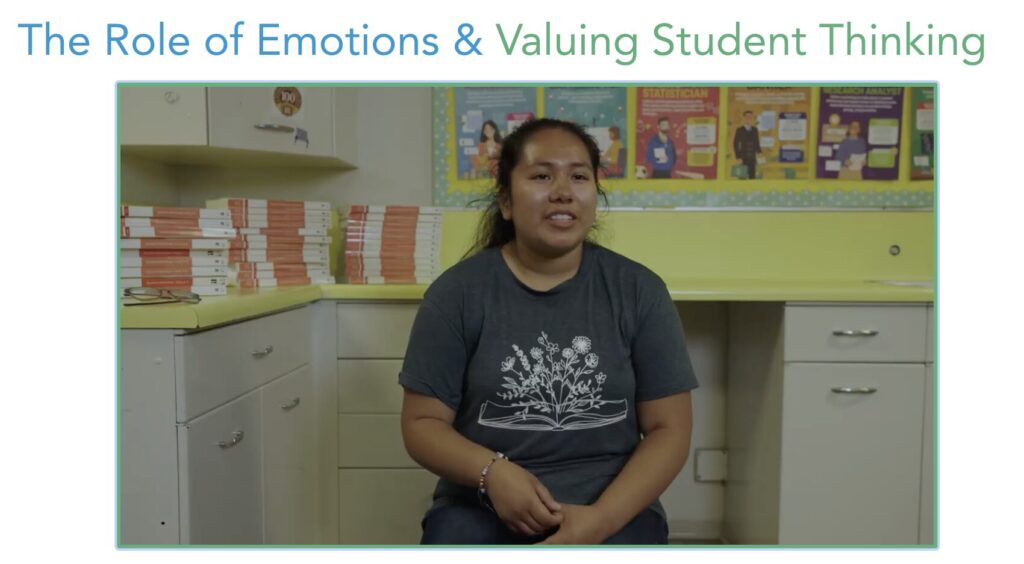
A student participates in an interview that served as a central component of messaging, elevating student voice to support teacher reflection.
PERTS and WestEd
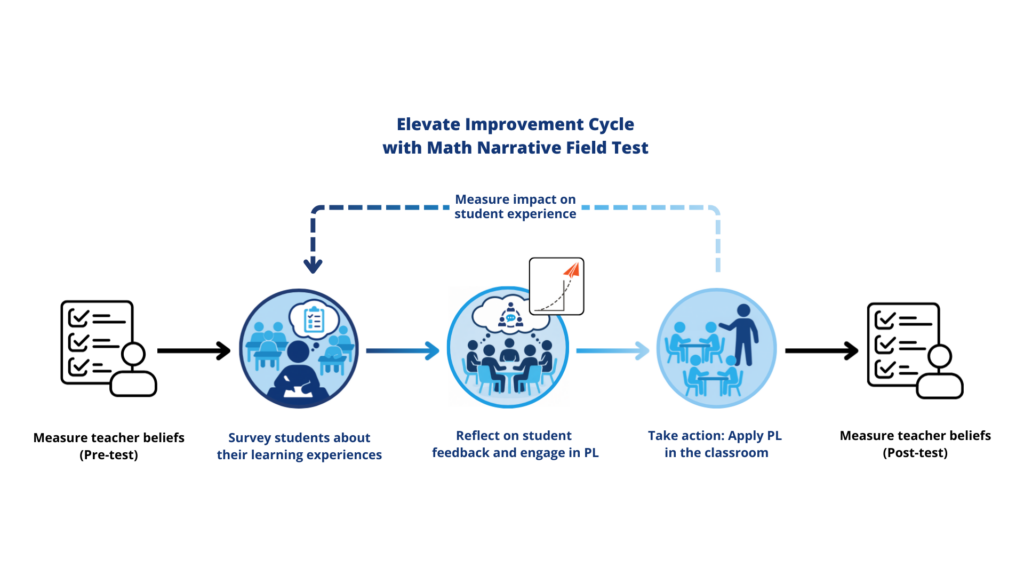
PERTS and WestEd embedded positive math narratives about building meaningful relationships and making mistakes in newly developed math practice materials (animated videos and lesson plans). The project reached 189 math teachers (87 exposed to messaging), and measured impacts with a 3-item pre- and post-test survey.


Primary analyses did not reveal an effect of Math Narratives messaging on teacher beliefs, as measured by the items in the survey. However, it is suspected that this null result may in part stem from ceiling effects in the belief items: teachers already rated the target beliefs as highly important at pre-test so there was not much potential for positive shifts. To supplement understanding and gain additional insights, qualitative data was consulted with that WestEd collected via teacher focus groups and interviews during material development.
Teachers shared that they appreciated that the animated videos featured real teachers and included voiceovers from real students. They noted how important it was that the videos were authentic, plausible, and situated in realistic depictions of classroom life, and that they felt supported when the lessons included a recognition of their limited time and heavy workload.
Finally, teachers shared that these practices filled a need for concrete, actionable strategies that they could begin using immediately in their classrooms to strengthen their relationships with students and improve their students’ experiences and beliefs about math.

Message development learnings:
- Authentic visuals are important alongside authentic messages and messengers
- Teachers desire messaging that affirms their personal and professional identities (e.g., as sensemakers, not just facilitators)
Biggest challenges:
- Measurement ceiling effects that hindered detecting impact
- Short timeline to figure out how to maximize engagement with messaging on our platform
TeachFX
TeachFX included math narratives about prioritizing relationships in a professional learning session and paired it with automated feedback on relationship-building practices with 14 6-9th grade teachers from Texas. Surveys, interviews, and classroom recordings were used to assess the impact on teachers’ beliefs and practices.

Teachers held strong beliefs on the importance of teacher–student relationships. Narrative messaging that emphasized the impact of relationships on math learning and highlighted low-effort practices increased teachers’ intentions to prioritize relationship-building and their confidence in integrating these practices into daily instruction.
Over a two-week TeachFX pilot, automated feedback on four relationship-building practices —greeting students, encouraging students, asking about students’ interests and lives, and checking on student well-being—was associated with modest but encouraging increases in teachers’ use of these practices for 10 of 14 teachers. Mean lesson-level counts increased from 2.65 at baseline to 4.15 during the pilot, a notable change given the short duration and concurrent shifts in teachers’ beliefs.
Classroom recordings showed how teachers’ intentions were reflected in practice, while interviews provided insight into teachers’ reflections about the feedback. Teachers reported greater awareness of both their strengths and gaps in relationship-building. The automated feedback allowed them to reflect on the quality of their interactions with specific students.
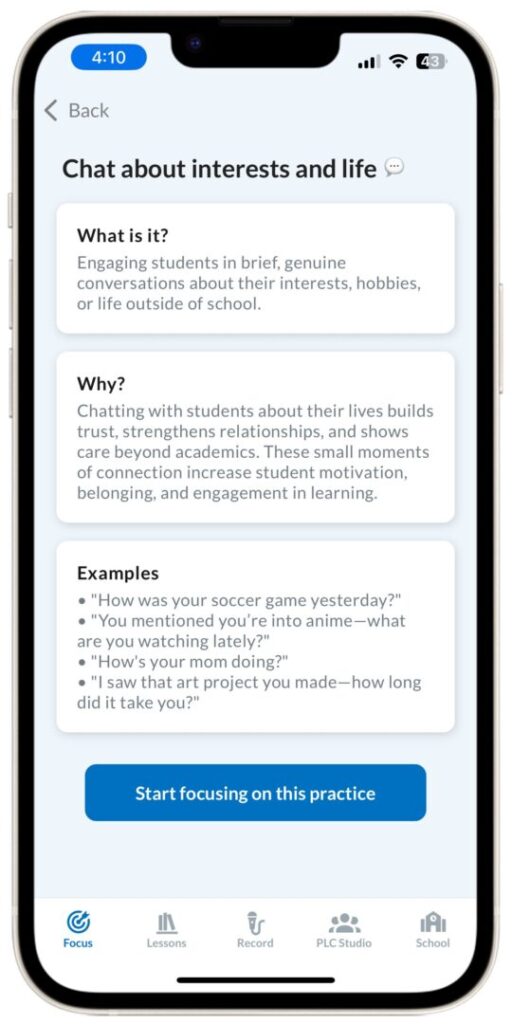
teachers with a clear definition, rationale, and examples to guide focus and goal setting.
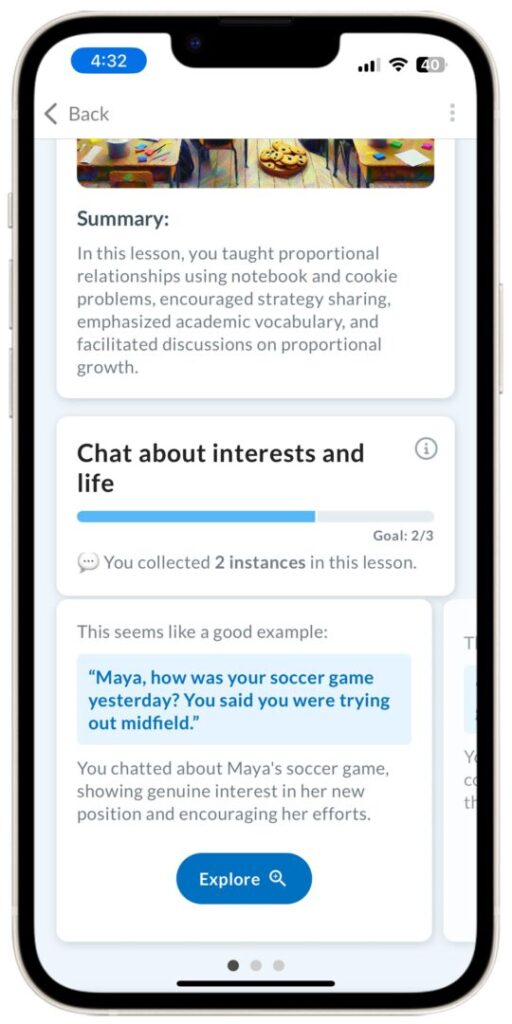
teachers’ use of the focus practice,
including counts and examples to
support reflection.
By prioritizing teacher narratives over expert-only messaging, professional learning became more responsive to teachers’ lived experiences. The prepared messaging also prompted in-the-moment peer-to-peer storytelling among participants, supporting deeper reflection on how relationship-building can fit within instructional constraints.
Teaching Lab
This field test integrated Math Narrative recommendations into existing High Quality Instructional Materials-aligned Professional Learning and coaching across New York City Public Schools. Messaging centered on real-world context, relevance, valuing mistakes, and reframing struggle and capability, supporting mindset shifts and changes in instruction.

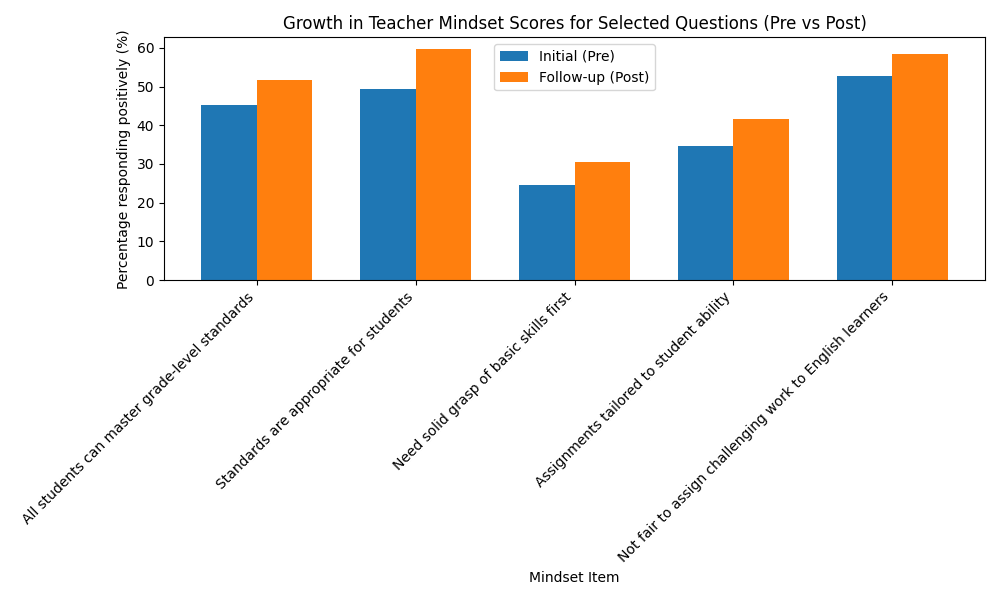
- Reframing struggle as capability shifted teacher expectations, disrupted deficit beliefs, especially for multilingual learners, and reduced premature lowering of rigor.
- Separating mathematical reasoning from English fluency is critical. The intervention helped teachers recognize students’ capabilities and attend more closely to mathematical thinking rather than to verbal accuracy.
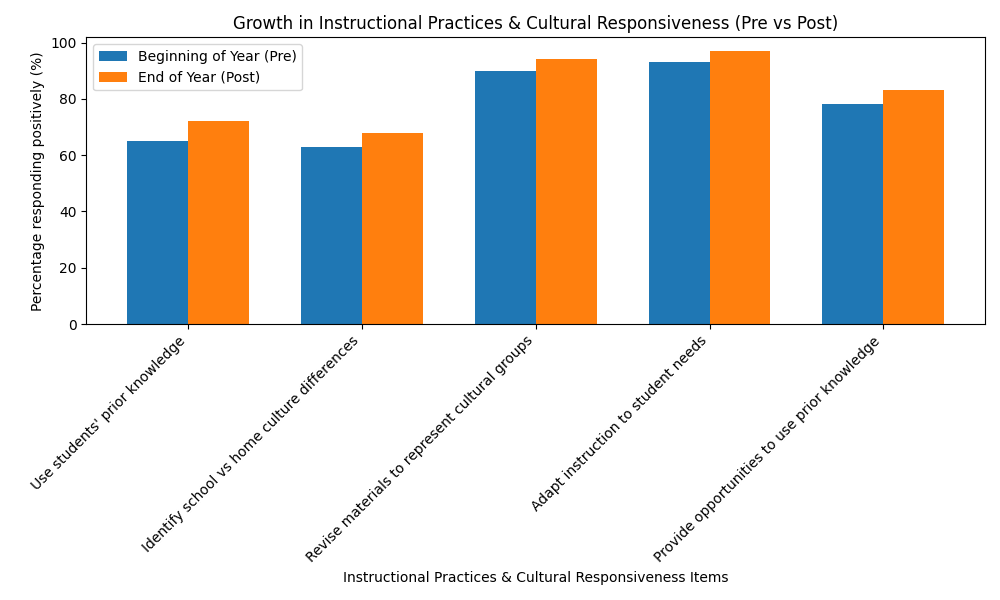
- Embedding narratives within existing Professional Learning structures increases impact. Integrating messaging supported sustained mindset shifts and stronger alignment to HQIM. Shifts in thinking were also accompanied by reported changes in practice.
- Narratives strengthen equitable use of instructional routines. Reframing Math Language Routines as tools for agency and sense-making, not remediation, encouraged teachers to maintain high expectations while expanding access through multiple modes of participation.
- Asset-based narratives elevate relevance and student voice. Emphasizing real-world contexts and students’ lived experiences increased teacher responsiveness to student thinking, strengthened instructional coherence, and supported more rigorous, equitable mathematics learning.
- Time and repetition matter.
- School leaders set the tone for schoolwide shifts in beliefs, emotions, and instructional practice. It could be helpful to have tested recommendations for this audience